
Clarwise
Poland’s Solar Generation Boom and the Decline in PV Capture Factor
As solar generation in Poland grows 10x in five years to 17.5 TWh, capture factors hit record lows of 50%. Exploring the challenges and strategies to keep solar both sustainable and profitable.

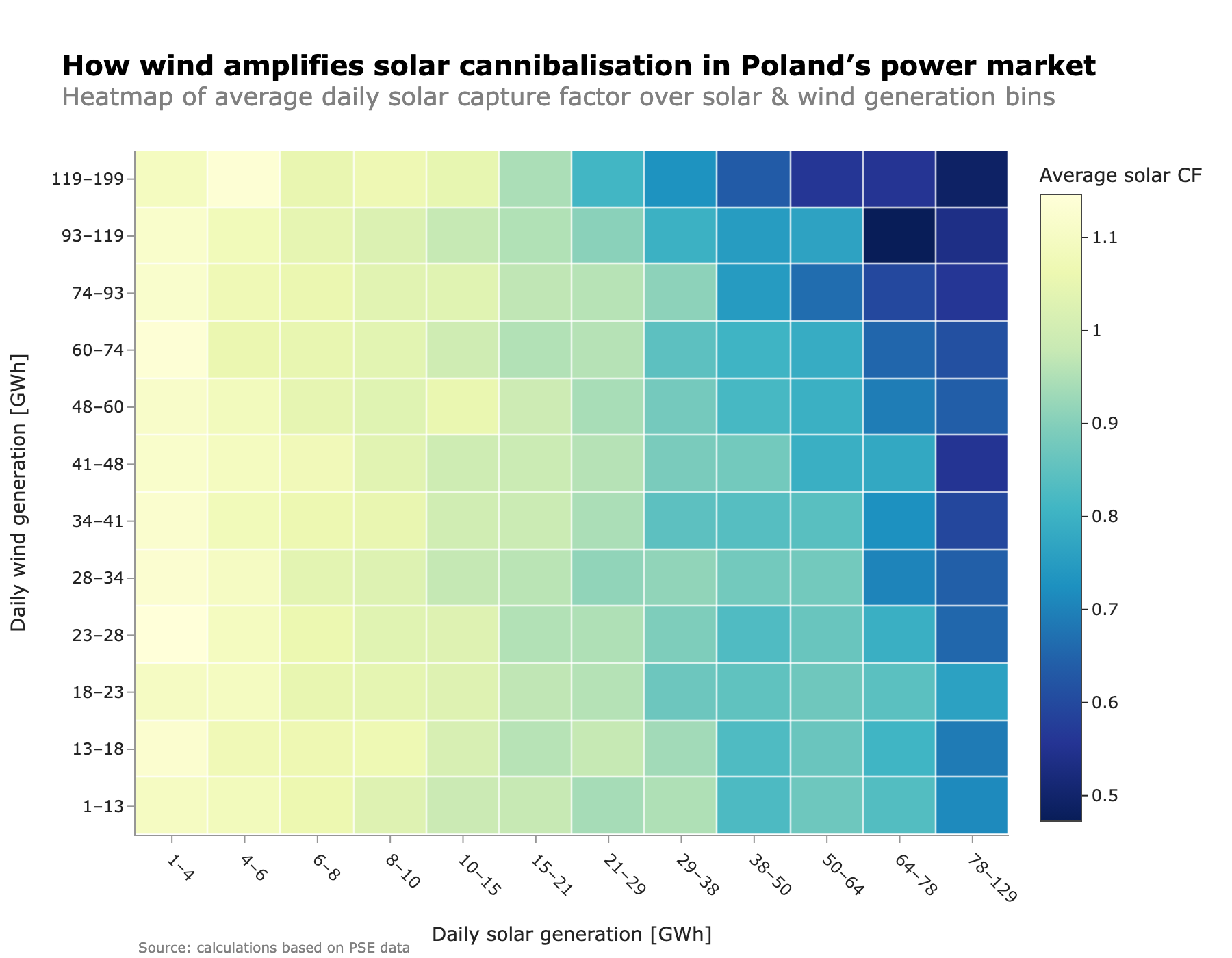
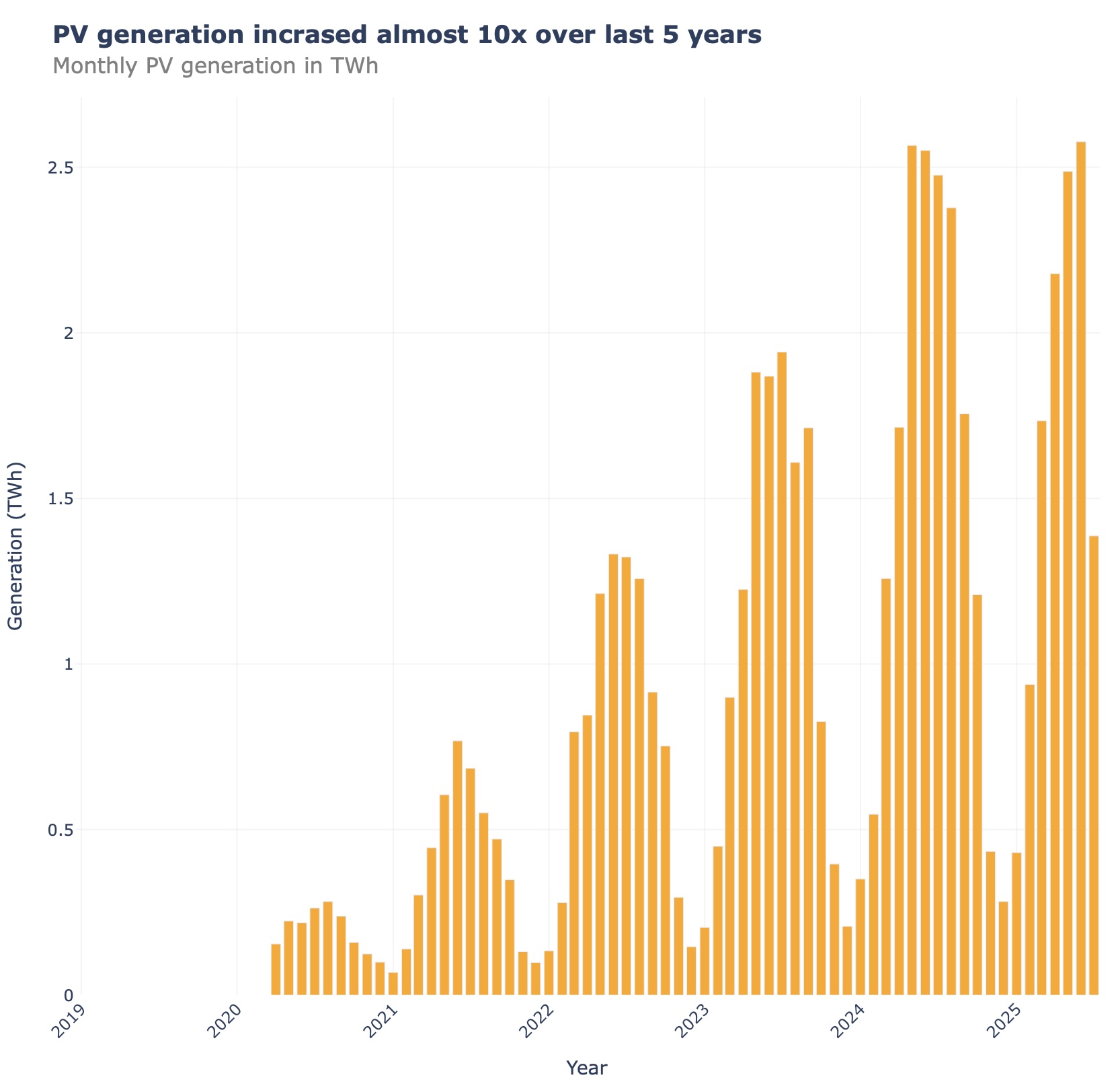
Solar generation in Poland has grown nearly 10x over the past five years to reach 17.5 TWh in 2024, and it’s having a dramatic impact on the energy market. In June 2025, the capture factor hit a record low, approaching 50%. The more solar power Poland generates, the lower the industry’s capture factor goes. It’s a paradox of success that’s reshaping the energy market in real time. This trend brings both challenges and transformative opportunities. The key question facing the industry is: what strategies can help ensure solar remains both sustainable and profitable as it scales?
What is the PV capture factor – and why does it matter?
The capture factor is a critical metric that compares the average market price received by PV generators to the overall wholesale power price. When the capture factor sits around 100%, solar generators earn roughly the same average price as the rest of the market across all hours. As it drops below 100%, it signals that PV is consistently selling power at a discount to the wholesale average – in other words, the system increasingly values those sunny hours less than the rest of the day.
As PV capacity grows, output becomes increasingly concentrated around sunny midday hours. When massive amounts of solar flood the system simultaneously, it pushes wholesale prices down during those peak production periods. Solar generators therefore sell most of their electricity when prices are depressed, which steadily pulls the capture factor lower.
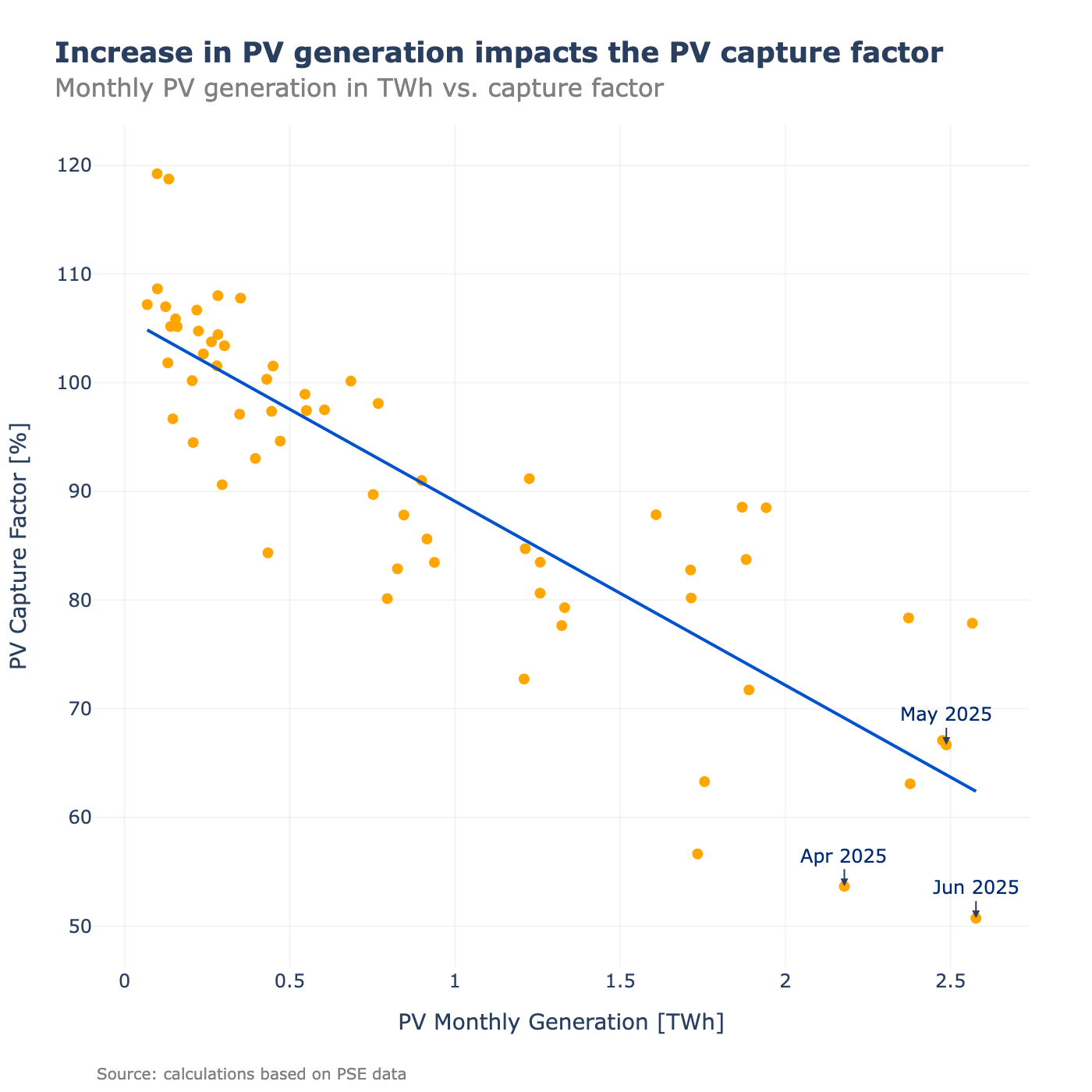
In Poland, the capture factor approaching 50% means that PV generators were earning roughly half of the average market price for electricity during that period. That represents a fundamental shift in the revenue model for the entire industry.
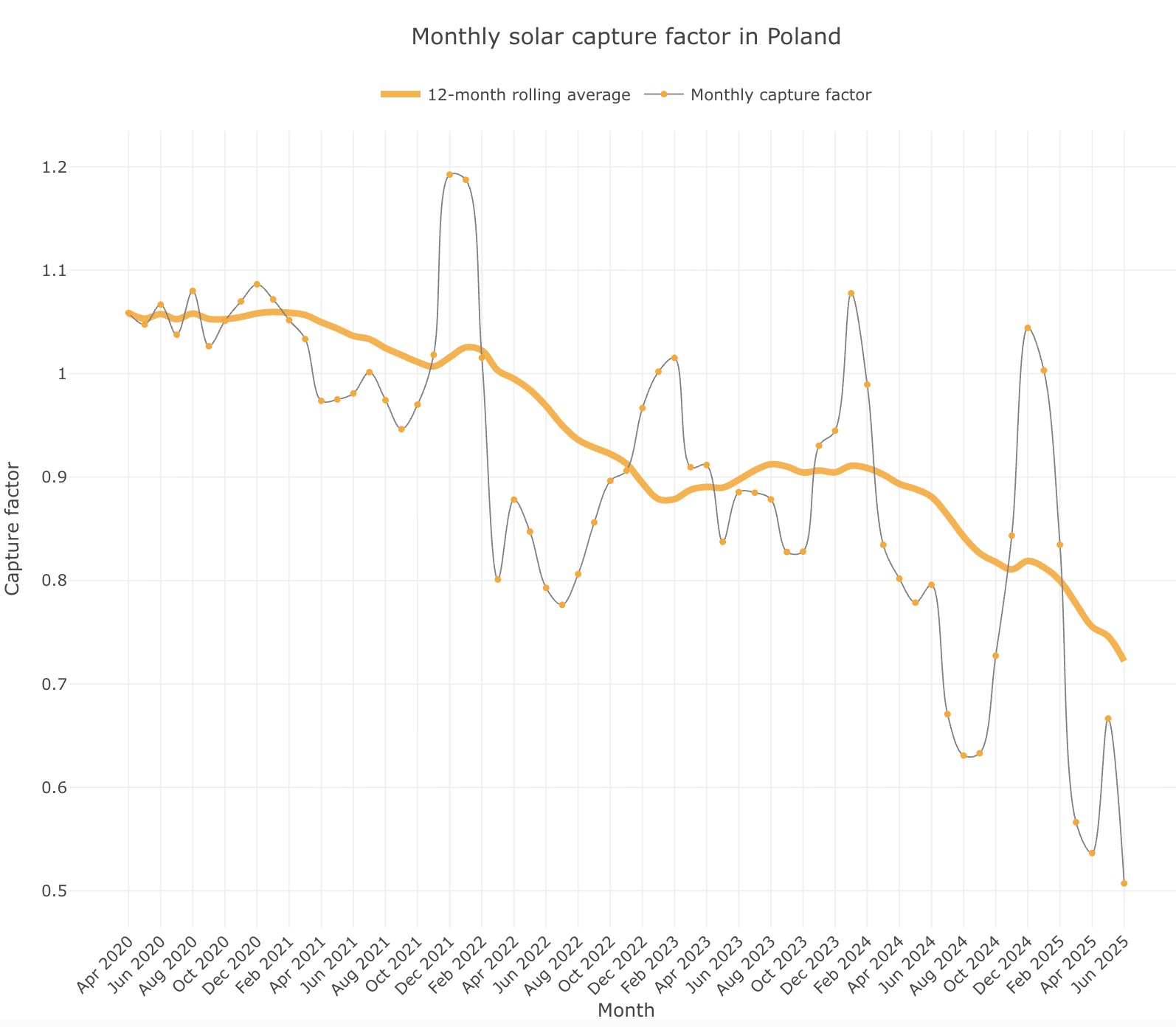
For readers who want to work directly with the underlying time series, we also provide a dedicated capture price dashboard with a live visualisation of the PV and wind capture prices in Poland.
Why Poland is experiencing the “cannibalization effect”
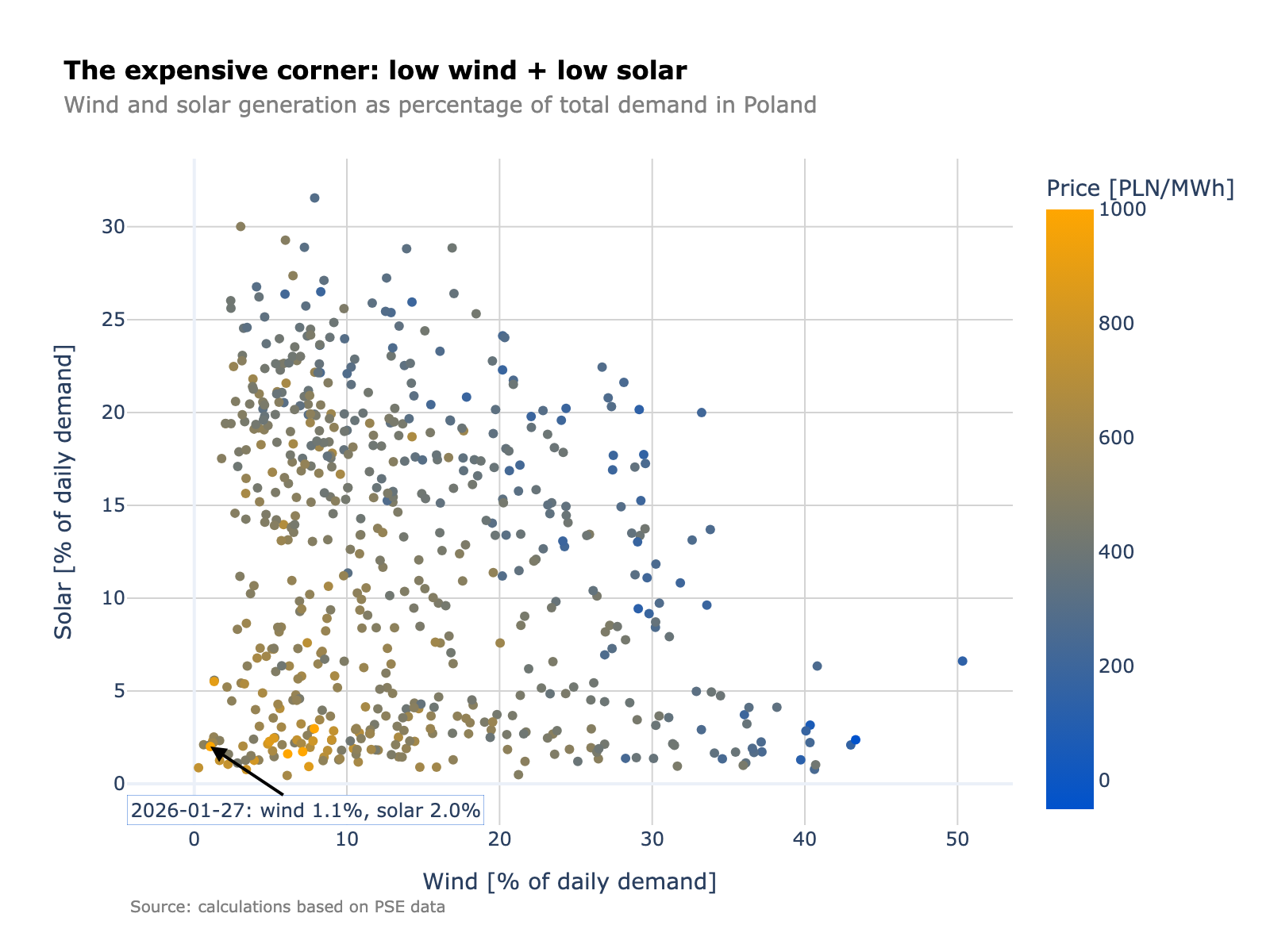
Poland’s situation is a textbook example of the price cannibalization effect that appears when renewable capacity scales rapidly. In just a few years, utility-scale PV and prosumer installations have expanded aggressively - installed capacity reached almost 23GW in June 2025. Much of this capacity looks very similar from a system perspective: most plants face the same sun and therefore follow almost identical generation patterns, all peaking in the same sunny midday hours. The result is a powerful surge of solar output that arrives in a narrow band of the day and often overwhelms local demand.
At the same time, the tools that could absorb or reshape that output are still catching up. Storage systems like BESS, flexible demand response, and other forms of grid flexibility have not yet scaled at the same pace as PV deployment. Without enough flexibility, the system has little choice but to push prices down during hours of solar abundance. Overlay this with a market design that largely reflects short-term marginal costs rather than long-term system value, and the gap between how much solar Poland produces and how much it actually earns widens further.
Taken together, these dynamics are great news for decarbonization and for consumers in the short term—more low‑carbon power and more hours with lower prices—but they fundamentally challenge the long-term business case for new PV projects if nothing else changes.
Strategies to keep solar sustainable and profitable
There is no single fix for Poland’s falling capture factor, but a mix of technology, market reforms and policy can keep solar both sustainable and investable. Scaling energy storage is one of the most direct levers: batteries and other storage systems shift generation away from low‑price midday hours into higher‑value evening periods, while co‑located PV‑plus‑storage and grid‑scale batteries smooth output, provide system services such as frequency control and reserves, and create extra revenue streams. The raises a need for BESS optimization across multiple markets and time horizons – deciding when to charge, discharge, provide services or stay idle. This is where specialised optimisation platforms such as Flexplum can help asset owners systematically maximise the value of their storage while supporting system flexibility.
On the demand side, more flexible consumption can have a similar effect. Smart tariffs and dynamic pricing could nudge EV charging, heat pumps and water heating into the middle of the day. Aggregators can then bundle thousands of these flexible loads into virtual power plants that respond to price signals and help “raise the floor” under prices when solar is abundant.
Modernising the grid is the third piece: stronger north–south and east–west transmission, digitalised distribution networks and better interconnectors with neighbours ensure that cheap solar can reach more consumers. Although non‑market redispatch driven by grid constraints accounted for less than 2% of total solar redispatch, it still affected around 11.5 GWh of solar energy as of the end of June 2025. Finally, smarter market design—through long‑term PPAs, well‑structured contracts for difference and robust capacity or flexibility markets—translates these physical solutions into bankable, predictable cash flows that keep new PV projects financeable even as capture factors fall.
From volume to value: the next phase of Poland’s solar story
The first chapter of Poland’s PV expansion was entirely about volume: rapidly adding capacity and proving that solar could become a major contributor to the national power mix.
The next chapter must focus on value: value for the power system, by cutting emissions and strengthening security of supply; value for consumers, through lower and more stable electricity bills; and value for investors, so that capital continues to flow into new projects instead of shifting elsewhere. Falling capture factors are not evidence that solar has failed. If anything, they show that PV has scaled fast enough to bend the market around itself and expose the limitations of the old design.
The path forward
Poland’s experience offers a preview of what many other markets will face as they transition toward higher shares of variable renewable energy. The decisions made over the next few years – on storage deployment, demand flexibility, grid upgrades, and market design reforms – will determine whether the record-low capture factor becomes a cautionary tale or a turning point toward a more resilient energy system.
The Polish solar industry stands at a crossroads. With the right combination of technical innovation, policy support, and market evolution, this challenge can become the foundation for the next phase of sustainable energy growth.